Workshops and manufacturing
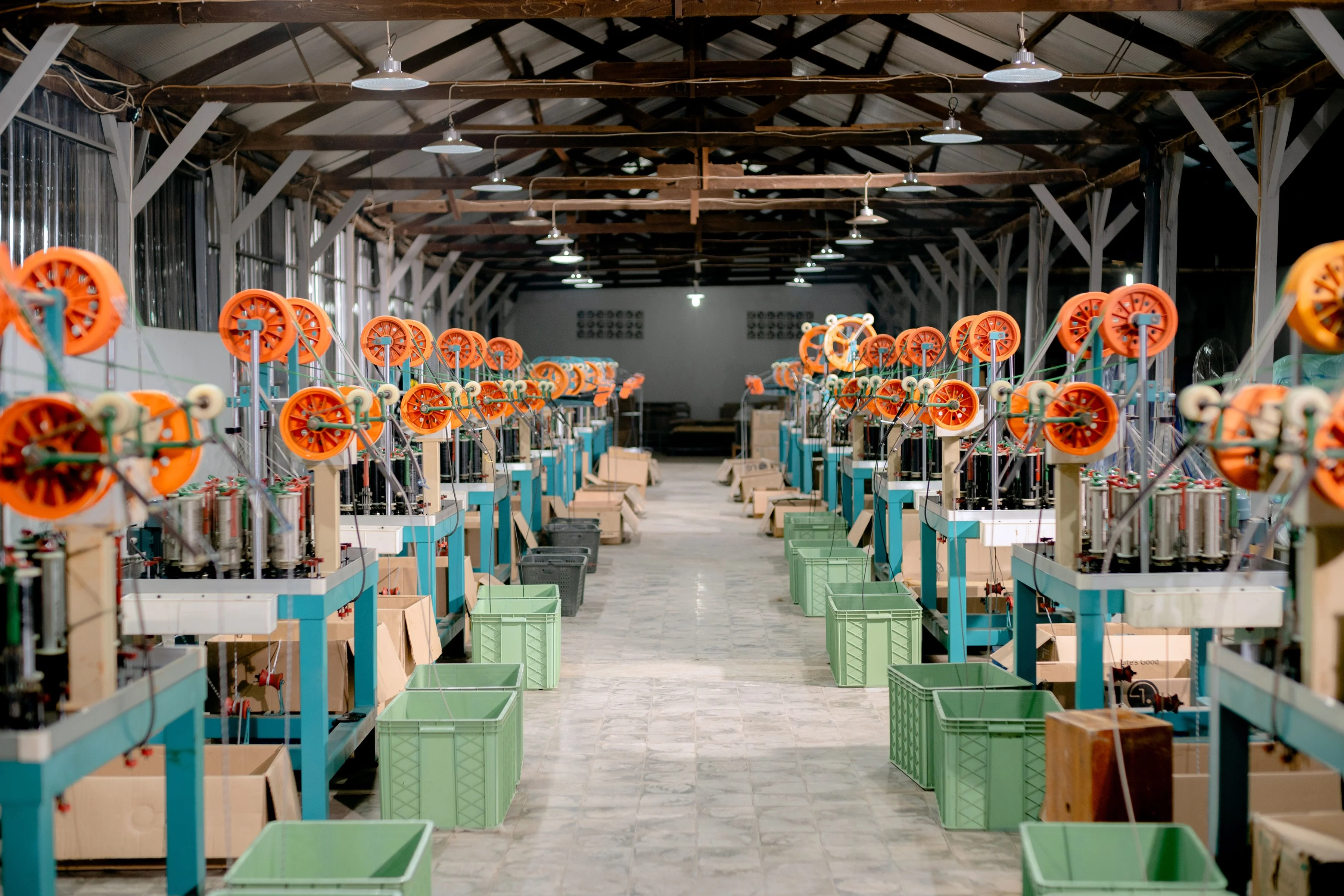
An order becomes a work order, which becomes hours, parts and an invoice. In between, it is usually paper crossing the shop floor.
Work order WO-318
Three stations · 7 h 25
- Estimated
- $1,850
- Actual
- $2,140
- Gap
- +$290
- Cutting2 h 15
- Welding3 h 40
- Painting1 h 30
For a workshop or a small manufacturer, we build the tool that follows an order from the quote to the invoice. The work order, the hours at each station and the parts used are recorded as the job moves, from the shop floor. At the end, you know what the order really cost.
Paper crossing the shop floor
In many shops, the work order is printed, follows the part from one station to the next and comes back to the office stained, with hours written by hand. Time and parts are then copied into a spreadsheet, when they are copied at all. The real cost of an order is known long after the fact, or never.
- A work order lost between two stations
- Hours written down from memory at week's end
- Parts used that never come out of stock
- An order invoiced without knowing if it paid off
With Studio Plavon
- Work orders
- Time per station
- Real cost per order
What the tool does
An order becomes a work order, which becomes hours, parts and an invoice. In between, it is usually paper crossing the shop floor.
Work orders
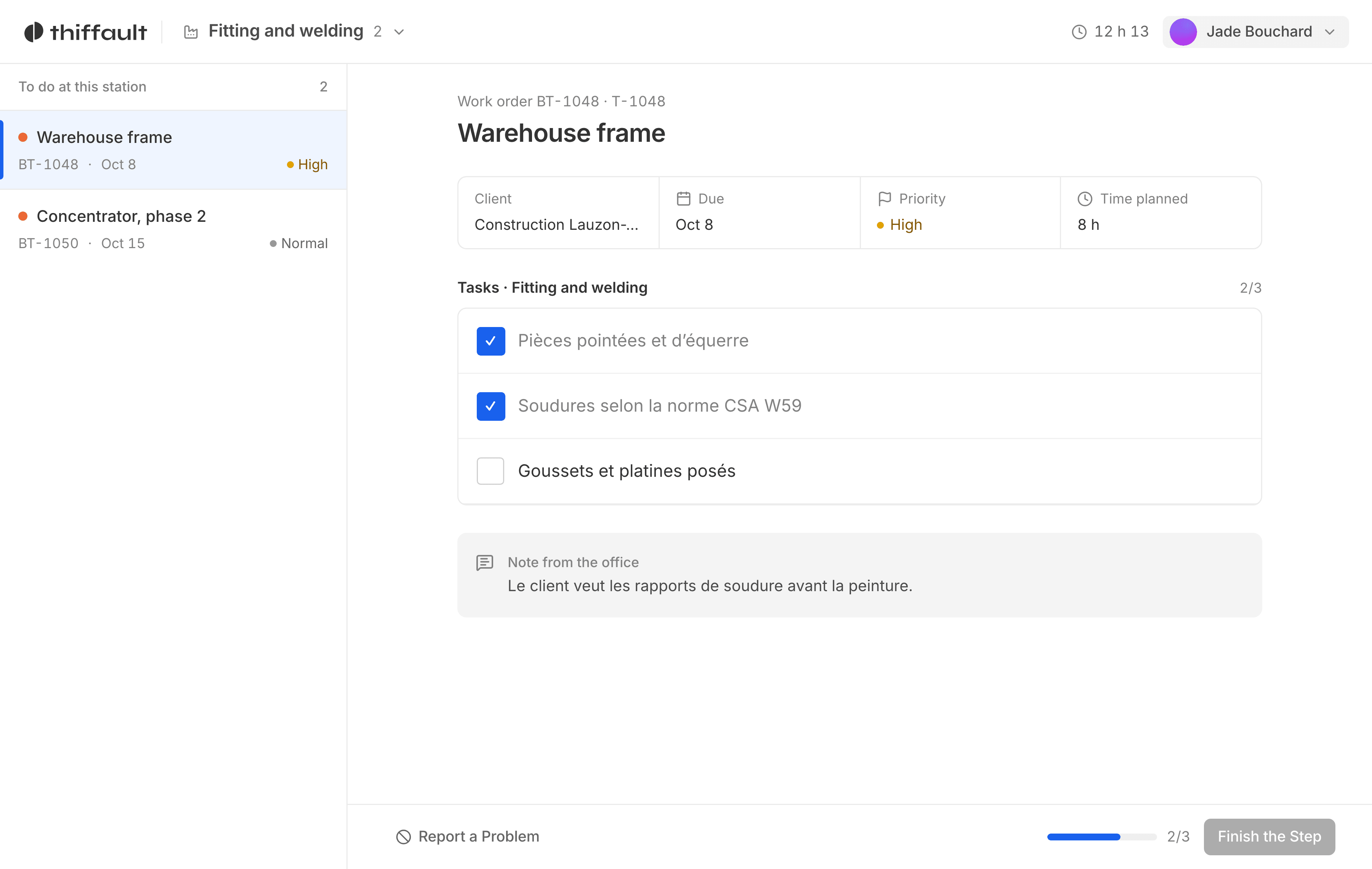
An accepted order becomes a work order with its steps, its stations and its planned parts. Every station sees it on screen, with no sheet to pass around.
Time per station
Employees start and stop their time on the work order, at their station, from a tablet or a phone. Hours are tied to the right order and the right step.
Parts and materials
Parts and materials used are recorded on the work order and taken out of stock. You know what each order consumed, and what needs reordering.
Order progress
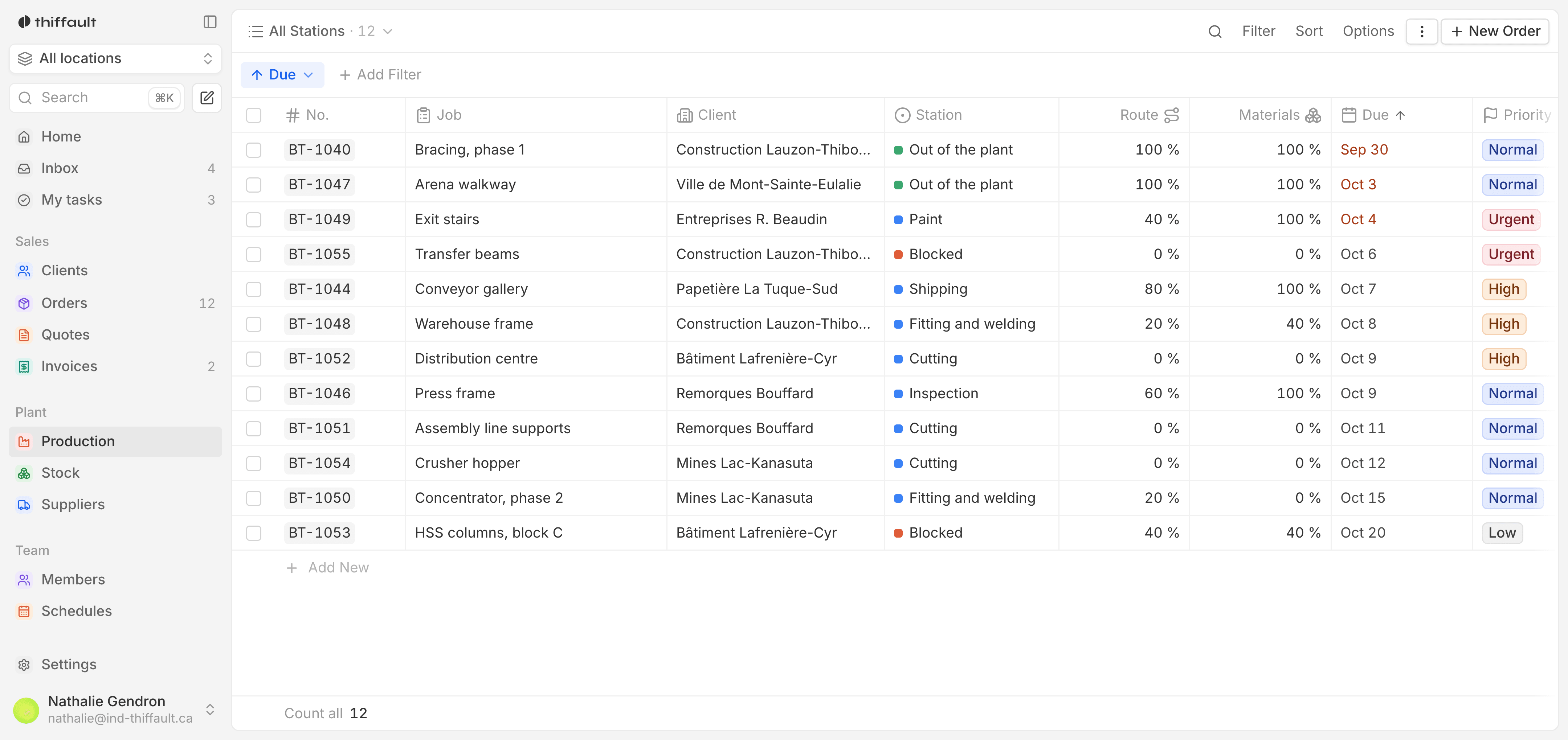
You see which station each order is at, what is waiting and what is late. The foreman assigns work based on what is actually happening.
Real cost per order
Hours and parts add up as the work goes, and the real cost is compared with the quote. You see which orders pay off and which ones cost more than planned.
Invoice from the work order
Once the work order is closed, the invoice is prepared from the hours and parts actually recorded. Nothing to retype, and nothing forgotten.
Who uses it, day to day
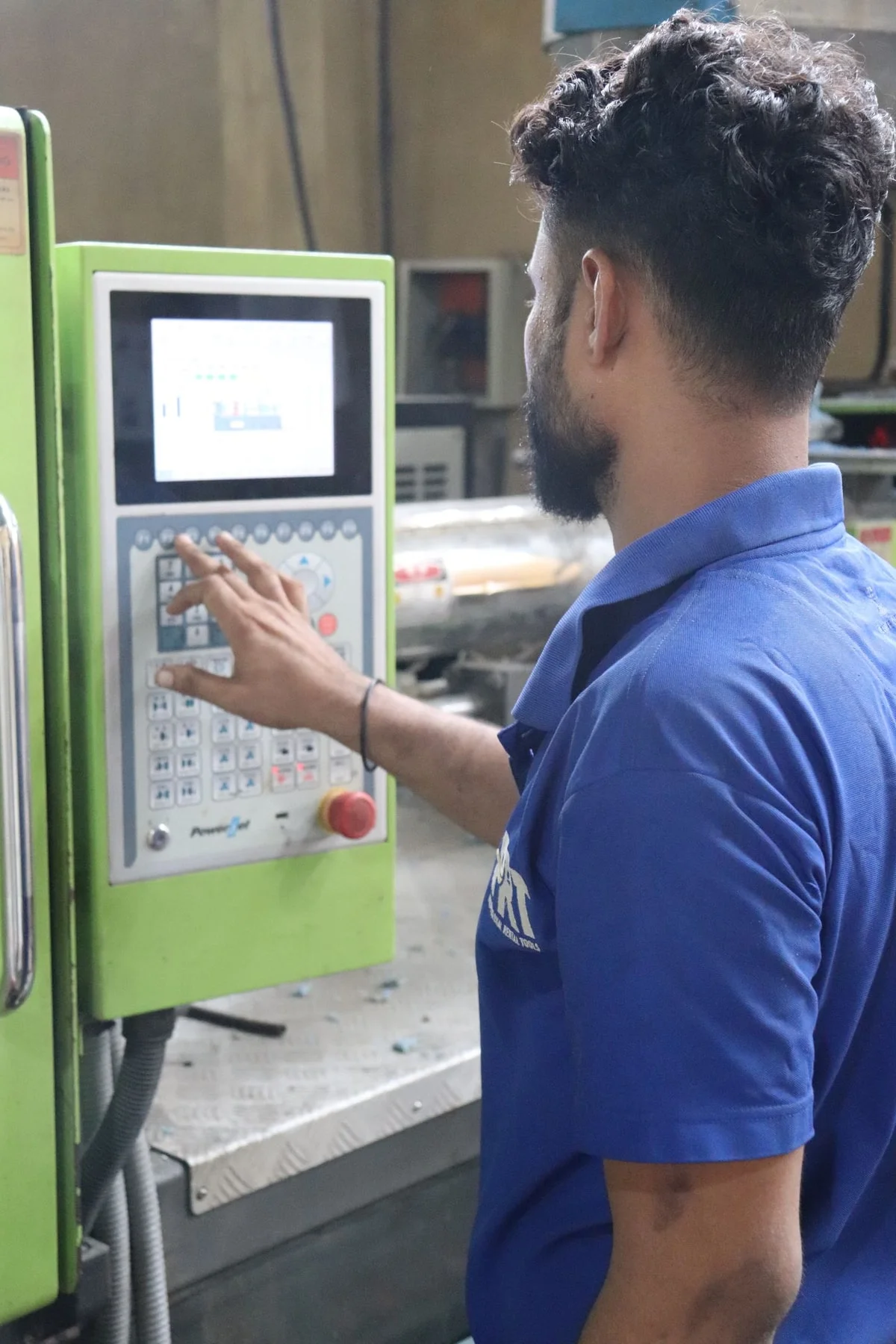
The shop floor
The work order at your station, and a button to start and stop your time. No more sheet to fill in at the end of the day.
The foreman
Where every order is, what is waiting and what is late, without walking the shop.
The office
The hours and parts on every order to invoice from, and the real cost to compare with the quote.
Included on every project
- A fixed price, paid once
- The source code is yours
- French from the first version
- Training for your teams
Frequently asked questions
My people are not comfortable with computers. Will they use it?
We design the screens with you, then test them with the people on the floor, not only with management. Then we train each team on its own work orders, until the day runs without us.
Can we keep the way we work?
Yes. The tool is built around the way your shop already runs: your quotes, your stations, your steps. We start by understanding your operations before drawing anything.
How is the price set?
The way a shop does it: with a quote. A first call is for getting to know each other; on the second, we present a one-page quote with what we deliver, the timeline and a fixed price, paid once. There is no per-employee subscription, and a monthly maintenance contract is available if you want one.